


Jane has a high amount of situational pressure, a high opportunity to commit fraud, and has high personal integrity. Jane has a low amount of situational pressure, a low opportunity to commit fraud, and low personal integrity. Jane has a low amount of situational pressure, a high opportunity to commit fraud and high personal integrity.
Long-term investments.
Plant assets hold significant importance in financial statements as they represent a substantial portion of a company’s long-term investments and play a central role in its operational capacity. Plant assets are recorded at their acquisition cost and adjusted for accumulated depreciation over time, which helps reflect their true, declining value due to wear and tear. Accurately reporting plant assets is essential for stakeholders, as it offers insight into the company’s fixed capital and the productive resources that support revenue generation.
Premium Investing Services
Depreciation is a crucial accounting practice as it allocates the cost of an asset across its useful life, matching the expense with the revenue it helps generate. This approach allows businesses to reflect the decreasing value of retained earnings balance sheet the asset accurately on financial statements. Various methods, like the straight-line or declining-balance method, are used to calculate annual depreciation. The exception is land, which typically does not depreciate because it doesn’t wear out or become obsolete over time. Plant assets are categorized as non-current assets on the balance sheet under “property, plant, and equipment” (PP&E).
Tangible
These are fixed assets such as land, buildings, factories, machinery, and vehicles. Vehicles include any company-owned cars, vans, trucks, or other transportation assets used for business purposes. In industries like logistics, delivery, and field services, vehicles are crucial for transporting goods, conducting on-site services, or allowing employees to travel between locations. Vehicles are subject to depreciation due to frequent use and exposure to external elements, and they require regular maintenance to stay operational.
- In each case, the company is adjusting the balance due to the vendor to account for the discrepancy.
- Depending on the industry, plant assets may make up either a very substantial percentage of total assets, or they may make up only a small part.
- Thus, for plant assets accounting, it is necessary to understand and have a clear idea about the above types of assets.
- Machinery and equipment include any machines, tools, and devices used in production, manufacturing, or service delivery.
Methods of Depreciation

A market demand schedule is a table that shows the total quantity of a good that is demanded at a certain price in the market. Looking at the table, it can be seen that there is an inverse relationship between price and quantity demanded. In conclusion, the degree of satisfaction received by customers throughout their lifecycle is largely dependent on customer relationship management. Distinguish between long-term investments and property, plant, and equipment. Buildings are structures like factories, offices, warehouses, and other places where businesses produce goods or provide services. The cost incurred would include legal fees, commissions, borrowing costs up to the date when the asset is ready for use, etc., are some of the examples.
- The image below shows the opening, depreciation, and closing values for 7 years.
- She has started to work for an entry-level accounting position at ABC Company Limited where she does not have much authority and all of her work has to be reviewed by her supervisor, and then the manager.
- Properly accounting for these diverse plant assets across industries provides insight into each company’s operational framework and financial stability.
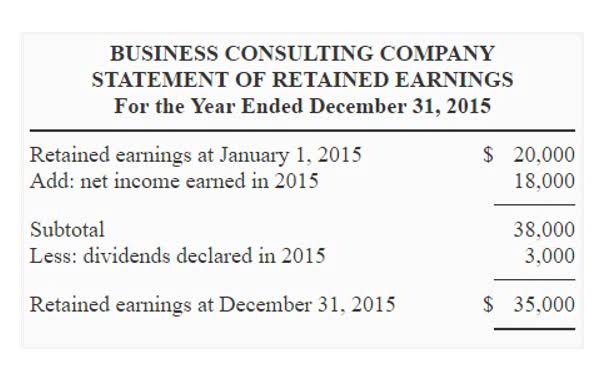
- Net income is a term used to describe the amount of money that a company, individual, or organization has earned after all of its expenses have been deducted from its total revenues.
Plant Assets in Financial Statements
Master the fundamentals of financial accounting with our Accounting for Financial Analysts Course. This comprehensive program offers over 16 hours of expert-led video tutorials, guiding you through the preparation and analysis of income statements, balance sheets, and cash flow statements. https://www.ganeshajaya.com/accounts-receivable-in-healthcare-an-overview-mhc-2/ Gain hands-on experience with Excel-based financial modeling, real-world case studies, and downloadable templates. Upon completion, earn a recognized certificate to enhance your career prospects in finance and investment.

Depreciation expense — calculated in several different ways — is then carried through to the income statement and reduces net income. Over time, plant asset values are also reduced by depreciation on the balance sheet. Like any category of assets, it’s critical to evaluate plant assets on a company-by-company basis. Generally, plant assets are among the most valuable company assets and tend to be relied on greatly over the long term.
More Questions In Business
Improvements refer to significant enhancements made to existing assets, either to extend their useful life or increase their functionality. Examples include adding extra storage to a warehouse, upgrading lighting systems, or installing additional security features. Improvements are often considered separate assets because they represent a new investment beyond the original purchase. Improvements are depreciated over their own useful life, and, like buildings or equipment, they add substantial value by allowing a business to adapt its resources to changing operational needs.
Current assets.
The expected rate of return on portfolio A is 12%, which is greater than the T-bill rate of 5%. As a result, one characteristic of plant assets is that they are portfolio A has a higher expected return, but it also has lower risk and volatility, making it a safer and more stable choice than Portfolio B. However, portfolio B’s higher expected return of 16% may be adequate to compensate for this additional risk. As a result, portfolio B provides a higher rate of return with a higher degree of risk.


As such, these assets provide an economic benefit for a significant period of time. From an accounting perspective, plant assets are typically held on the balance sheet at historical cost (what the company paid for them) less depreciation (ongoing wear-and-tear expense) over time. This can help provide accurate financial information if the market for plant assets is unusually volatile. The acquisition cost of a plant asset includes not just the purchase price but also any additional expenses necessary to make the asset ready for use.